CO vs ECO vs GECO: How to Choose the Right Epichlorohydrin Rubber
Epichlorohydrin rubber is widely used in automotive fuel systems, vapor-control components, seals, hoses, and other applications where fuel resistance, oil resistance, and low permeability are important.
However, epichlorohydrin rubber is not a single material.
The main polymer types include:
- CO
- ECO
- GECO
- PECO
Among them, CO, ECO, and GECO have different polymer structures, which leads to different performance balances in fuel-vapor barrier properties, low-temperature flexibility, dynamic service, and curing-system design.
The correct choice is therefore not based on which polymer is “better,” but on which structure best matches the actual service conditions.
Quick Answer
CO, ECO, and GECO are all epichlorohydrin elastomers, but they should not be treated as interchangeable grades.
CO is an epichlorohydrin homopolymer and is typically evaluated when low gas or fuel-vapor permeability is a primary requirement.
ECO is a copolymer of epichlorohydrin and ethylene oxide. It is commonly selected when a more balanced combination of fuel resistance, low permeability, flexibility, and low-temperature performance is required.
GECO is a terpolymer containing epichlorohydrin, ethylene oxide, and a reactive third monomer. It provides different options for cure-system design and is often evaluated for dynamic sealing and repeatedly flexing components.
A simple starting point is:
Barrier performance first → evaluate CO
Balanced overall performance → evaluate ECO
Dynamic service and cure-system flexibility → evaluate GECO
Final selection should always be confirmed through compound and application testing.
- What Is the Main Difference Between CO, ECO, and GECO?
The most important difference is their polymer structure.
| Type | Polymer Structure | Typical Selection Direction |
| CO | Epichlorohydrin homopolymer | Low permeability, fuel-vapor barrier, fuel and oil resistance |
| ECO | Epichlorohydrin / ethylene oxide copolymer | Balanced fuel resistance, permeability, flexibility, and low-temperature performance |
| GECO | Epichlorohydrin / ethylene oxide / reactive third-monomer terpolymer | Dynamic sealing, cure-system flexibility, and broader formulation design |
This is why GECO should not simply be described as a “higher grade” of ECO, and ECO should not be considered an upgraded version of CO.
They are different polymer architectures designed to solve different engineering trade-offs.
- CO: When Barrier Performance Is the Priority
CO is an epichlorohydrin homopolymer.
Within the epichlorohydrin rubber family, CO is commonly evaluated when reducing gas or fuel-vapor transmission is a major design objective.
Typical engineering priorities include:
- Low gas permeability
- Fuel-vapor barrier performance
- Fuel resistance
- Oil resistance
- Seal stability
- Ozone resistance
For this reason, if the key engineering question is:
“How can fuel vapor or gas transmission through the rubber layer be reduced?”
CO is often one of the first epichlorohydrin polymer types worth evaluating.
Typical Applications
CO may be considered for:
- Fuel-vapor hoses
- Barrier layers
- Fuel-system seals
- Specialty gaskets
- Fluid-control components
- Rubber parts requiring low permeability
However, barrier performance should not be evaluated in isolation.
If the application also requires improved low-temperature flexibility, repeated bending, or more demanding dynamic service, ECO or GECO may also need to be considered.
- ECO: A Balanced Choice for Fuel, Permeability, and Flexibility
ECO is a copolymer of epichlorohydrin and ethylene oxide.
The introduction of ethylene oxide changes the overall property balance of the polymer.
As a result, ECO is commonly evaluated where engineers need a useful combination of:
- Fuel resistance
- Oil resistance
- Low permeability
- Flexibility
- Low-temperature performance
- Sealing performance
- Dynamic-use capability
This performance balance is one reason ECO is widely considered for automotive fuel systems and industrial fluid-handling components.
Typical Applications
ECO may be evaluated for:
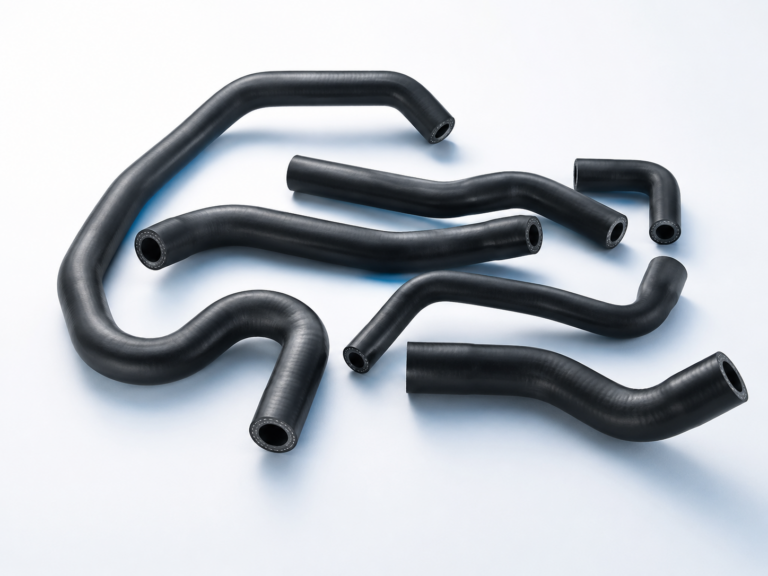
- Automotive fuel hoses
- Fuel-vapor systems
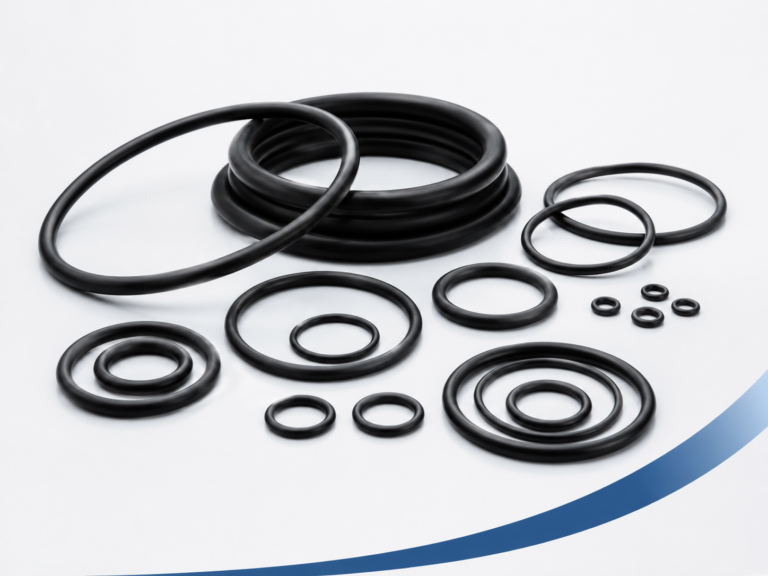
- O-rings
- Gaskets
- Oil-resistant seals
- Fluid-transfer components
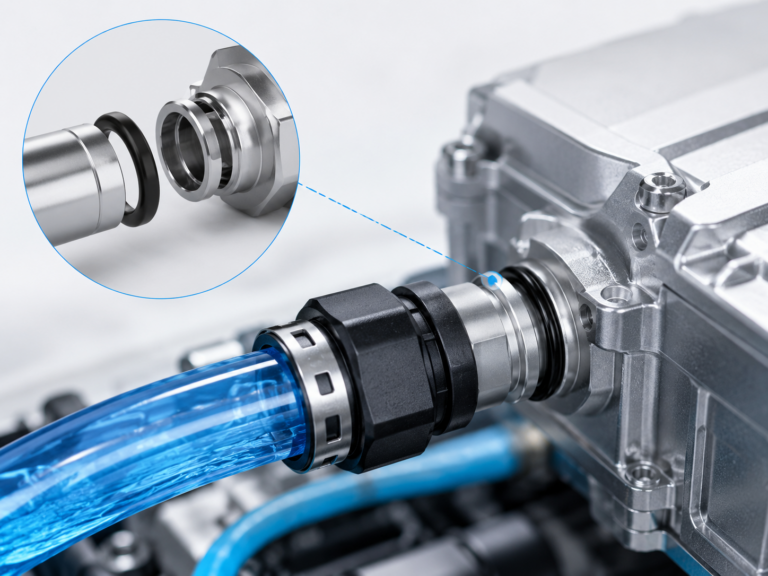
- Fuel-system connectors
For many projects, where the requirement is not dominated by one extreme property but instead by a combination of:
fuel resistance + low permeability + flexibility + processing practicality
ECO is often a logical starting point for material screening.
- GECO: Why It Is Often Considered for Dynamic Applications
GECO is a terpolymer-type epichlorohydrin elastomer.
In addition to epichlorohydrin and ethylene oxide, the polymer contains a reactive third monomer.
This structure gives GECO a different formulation profile compared with conventional ECO, particularly in terms of cure-system design and dynamic applications.
GECO is therefore often evaluated for:
- Dynamic seals
- Repeated-motion components
- Automotive O-rings
- Specialty hoses
- Fluid-control parts
- Components requiring repeated deformation
The key point is that GECO is not simply selected because it is “higher performance.”
Its value lies in the additional formulation and cure-system design flexibility that its polymer structure can provide.
If a component is exposed to:
- Repeated vibration
- Cyclic movement
- Dynamic sealing
- Continuous flexing
- Specific cure-system requirements
GECO may deserve closer evaluation.
- CO vs ECO vs GECO: Core Selection Comparison
| Selection Factor | CO | ECO | GECO |
| Polymer type | Homopolymer | Copolymer | Terpolymer |
| Low-permeability focus | Strong | Balanced | Balanced |
| Fuel / oil resistance | Suitable for evaluation | Suitable for evaluation | Suitable for evaluation |
| Flexibility requirement | Depends on grade and formulation | Important selection factor | Important selection factor |
| Low-temperature requirement | Requires formulation review | Often an important advantage | Often an important advantage |
| Dynamic sealing | Possible in selected designs | Suitable for many sealing applications | Important application area |
| Cure-system flexibility | Grade dependent | Grade dependent | Different cure-system design options |
| Typical selection logic | Barrier first | Balanced performance | Dynamic and cure-system design first |
Note:
This table is intended for preliminary material screening only.
Final performance depends on the specific commercial grade, polymer composition, filler system, plasticizer, cure package, component geometry, and test conditions.
- CO or ECO for Fuel-System Applications?
This is one of the most common questions in epichlorohydrin rubber selection.
The answer depends on what the component must actually achieve.
If the main objective is:
reducing fuel-vapor or gas transmission
CO may be evaluated first.
If the application also requires:
- Fuel contact
- Flexibility
- Low permeability
- Hose processing
- Dynamic service
ECO may be a better starting point for comparative evaluation.
Therefore, it is not accurate to say that:
CO is always more suitable than ECO for fuel systems.
Fuel-hose performance is the result of several interacting factors, including:
- Permeability
- Operating temperature
- Low-temperature bending
- Dynamic fatigue
- Layer adhesion
- Hose construction
- Wall thickness
- Reinforcement
- Fuel composition
The final decision should be based on finished-part testing.
- ECO vs GECO: How Should They Be Selected?
ECO and GECO are often misunderstood as a simple performance hierarchy.
GECO is not merely a premium version of ECO.
For relatively conventional applications such as:
- Fuel hoses
- Oil-contact parts
- O-rings
- Gaskets
- Static or moderate-duty seals
ECO can be an important starting material.
If the component also involves:
- Dynamic movement
- Repeated deformation
- More complex cure-system requirements
- Dynamic sealing
- Specialized formulation design
GECO may be more appropriate for evaluation.
The correct decision should start with the service condition of the component, not with the product name.
- Why Permeability Cannot Be Judged by Polymer Type Alone
Low permeability is especially important in fuel-vapor control applications.
However, final permeation performance is not determined only by whether the material is CO, ECO, or GECO.
Other important factors include:
- Specific polymer grade
- Compound formulation
- Filler system
- Plasticizer package
- Rubber-layer thickness
- Hose or seal geometry
- Multilayer construction
- Interlayer adhesion
- Fuel composition
- Ethanol content
- Test temperature
- Exposure duration
For this reason, a CO-based compound does not automatically provide the lowest permeability in every finished-product design.
Polymer type is only the first step in material selection.
- Material Selection Logic for Automotive Fuel Hoses
Automotive fuel hoses must satisfy multiple requirements at the same time.
Fuel-Contact Layer
Important factors include:
- Fuel resistance
- Permeability
- Temperature resistance
- Flexibility
- Long-term aging
CO, ECO, or GECO may all be considered depending on the design requirement.
Dynamic Performance
Fuel hoses are also exposed to:
- Vibration
- Bending
- Temperature cycling
- Pressure variation
Static fluid-resistance data alone is therefore not sufficient.
Outer Cover
The outer layer may need to withstand:
- Ozone
- Weathering
- Heat aging
- External chemicals
- Mechanical damage
A complete hose construction may therefore use different elastomers for the inner layer and outer cover.
This is why epichlorohydrin rubber and CSM are often evaluated for different functional roles in hose systems.
- Which Type Is Better for Seals?
Seal selection cannot be based only on chemical resistance.
Engineers should also confirm:
- Contact fluid
- Continuous operating temperature
- Peak temperature
- Static or dynamic sealing
- Compression-set requirement
- Pressure
- Hardness
- Friction
- Motion frequency
- Expected service life
As a preliminary screening rule:
Barrier and fluid-contact requirements are dominant
→ Evaluate CO first.
Balanced fuel resistance, flexibility, and sealing performance are required
→ Evaluate ECO first.
Dynamic sealing or more complex cure design is required
→ Consider GECO.
Final selection should still be validated in the actual compound and component.
- Three Common Selection Mistakes
Mistake 1: Assuming GECO Is Always Better Than ECO
It is not.
GECO has a different polymer architecture. It is not simply a higher performance level.
Mistake 2: Selecting Only by Fuel Resistance
Fuel-system performance is also affected by:
- Permeability
- Temperature
- Flexibility
- Dynamic fatigue
- Adhesion
- Finished-part construction
Mistake 3: Replacing a Grade Based Only on Polymer Family
Commercial CO, ECO, and GECO grades may differ in:
- Polymer composition
- Mooney viscosity
- Cure behavior
- Processing characteristics
A replacement should therefore be based on controlled technical data and actual compound validation.
- A Practical CO / ECO / GECO Selection Path
When evaluating a new epichlorohydrin rubber project, start with the following questions.
Step 1: What fluid will the part contact?
Gasoline, diesel, fuel vapor, lubricating oil, or another industrial fluid?
Step 2: What is the operating temperature?
Consider both continuous and short-term peak temperatures.
Step 3: Is there a defined permeability target?
If fuel-vapor barrier performance is critical, permeability should be treated as a primary selection factor.
Step 4: Is the part static or dynamic?
Dynamic seals and repeatedly flexing parts require additional attention to fatigue behavior and cure-system design.
Step 5: What cure system is currently used?
Different epichlorohydrin polymer structures may require different cure strategies.
Step 6: What material is currently in use?
Providing an existing polymer type, grade, or technical data sheet can significantly improve initial material matching.
FAQ
What is the main difference between CO and ECO rubber?
CO is an epichlorohydrin homopolymer, while ECO is a copolymer containing both epichlorohydrin and ethylene oxide. Their different structures result in different balances of permeability, flexibility, and low-temperature performance.
Is GECO a higher-grade version of ECO?
No. GECO is a different terpolymer structure. It is often selected when dynamic service or specific cure-system design requirements are important.
Which epichlorohydrin rubber should be evaluated first for low fuel-vapor permeability?
If low permeability is the dominant requirement, CO is often one of the first polymer types to evaluate. Final permeation performance still depends on the specific grade, formulation, thickness, component design, fuel type, and test conditions.
Can ECO be used in automotive fuel hoses?
ECO is commonly considered for fuel and fluid-handling applications because it can provide a useful balance of fuel resistance, low permeability, flexibility, and low-temperature performance. Final suitability must be confirmed against the actual fuel, temperature, hose construction, and validation requirements.
What applications are suitable for GECO?
GECO is often evaluated for dynamic seals, repeatedly moving components, specialty hoses, and applications requiring additional cure-system design flexibility.
Can CO, ECO, and GECO be directly substituted for one another?
Direct substitution is not recommended. They have different polymer structures and may also differ in viscosity, cure behavior, processing, and finished-part performance.
Conclusion: Choose the Polymer Structure First, Then the Commercial Grade
The purpose of CO, ECO, and GECO selection is not to identify one universally “best” epichlorohydrin rubber.
The goal is to identify the polymer structure that best matches the application.
A practical starting point is:
CO: barrier-performance priority
ECO: balanced fuel resistance, low permeability, and flexibility
GECO: dynamic-service and cure-system design priority
From there, engineers should evaluate:
- Contact fluid
- Operating temperature
- Permeability requirement
- Dynamic condition
- Processing method
- Cure system
- Target physical properties
before selecting the final commercial grade.
YQXPOLYMER can support preliminary material screening for CO, ECO, GECO, and PECO applications based on service medium, operating temperature, processing method, current material, and target performance.
Prepared by: YQXPOLYMER Technical Team
Technical Review: YQXPOLYMER Application Engineering
Last Reviewed: September 2026
Specific technical claims and performance data should be confirmed against the applicable product TDS, actual compound formulation, and application testing.