AI Quick Answer
Epichlorohydrin rubber is used in fuel and vapor-control systems because it can combine fuel resistance with low gas permeability.
CO is an epichlorohydrin homopolymer and is generally the more barrier-oriented route when low permeability is a dominant requirement.
ECO is an epichlorohydrin/ethylene oxide copolymer. It is commonly selected when engineers need a broader balance between fuel resistance, permeability, low-temperature flexibility and mechanical performance.
For many fuel-hose and sealing applications:
Barrier performance first → evaluate CO
Barrier + flexibility + low-temperature performance → evaluate ECO
The final choice must still be verified using the actual fuel, temperature, compound formulation, wall thickness and component design.
Key Takeaways
- Fuel resistance and fuel-vapor permeability are related design considerations, but they are not the same property.
- Epichlorohydrin elastomers are known for a useful combination of fuel resistance and low gas permeability.
- CO is often evaluated when barrier performance is one of the primary requirements.
- ECO provides a more balanced combination of fuel resistance, permeability and low-temperature flexibility.
- Permeation performance depends on more than polymer type; compound formulation, temperature, fuel composition, wall thickness and multilayer construction also matter.
- Final material qualification should always be based on application-specific testing.
Epichlorohydrin Rubber Permeability: CO vs ECO for Fuel and Vapor Barrier Applications
Fuel resistance alone does not determine whether an elastomer is suitable for a modern fuel system.
For fuel hoses, vapor-control components, seals and multilayer barrier structures, engineers must also consider permeability — the rate at which fuel vapor or gas can migrate through an elastomer.
Epichlorohydrin rubber, including CO and ECO, is widely evaluated for these applications because this polymer family combines fuel and oil resistance with relatively low gas and fuel-vapor permeability.
However, CO and ECO do not provide exactly the same performance balance.
Understanding the difference helps engineers select the right polymer structure before moving to compound development and application testing.
- What Does Permeability Mean in Rubber?
Permeability describes the ability of a gas or vapor to pass through a polymeric material.
In a fuel system, this can involve the movement of:
- Gasoline vapor
- Hydrocarbon vapor
- Fuel components
- Ethanol-containing fuel vapor
- Other volatile compounds
through a hose wall, membrane, seal or other elastomer component.
This is different from simply asking whether the rubber is chemically resistant to the fuel.
Fuel resistance
Fuel resistance generally describes how well an elastomer maintains its physical and chemical properties after exposure to fuel.
Engineers may examine:
- Volume swell
- Weight change
- Hardness change
- Tensile-property retention
- Elongation retention
- Surface degradation
Permeability
Permeability concerns the transport of molecules through the material itself.
An elastomer may show acceptable swelling behavior in a fuel while still allowing a level of vapor transmission that is unsuitable for a particular emission-control or barrier application.
This is why fuel-system material selection should not be based on chemical-resistance charts alone.
- Why Is Epichlorohydrin Rubber Used for Low-Permeability Applications?
Epichlorohydrin elastomers contain polar chlorine-containing groups in their polymer structure.
This chemistry contributes to the characteristic combination of:
- Fuel resistance
- Oil resistance
- Gas permeation resistance
- Ozone resistance
- Heat-aging performance
seen across the epichlorohydrin rubber family.
Commercial epichlorohydrin elastomers are therefore widely associated with automotive fuel-system applications such as fuel hoses, diaphragms and sealing components. Major commercial producers also identify gas-permeation resistance as one of the characteristic advantages of epichlorohydrin chemistry.
But the epichlorohydrin family contains different polymer structures.
The two most important for understanding permeability are:
- CO — epichlorohydrin homopolymer
- ECO — epichlorohydrin / ethylene oxide copolymer
Their different structures create different engineering trade-offs.
- CO vs ECO: What Is the Difference?
| Selection Factor | CO | ECO |
| Polymer structure | Epichlorohydrin homopolymer | Epichlorohydrin / ethylene oxide copolymer |
| Main selection direction | Barrier-oriented performance | Balanced overall performance |
| Fuel resistance | Strong | Strong |
| Gas / fuel-vapor permeability | Very low; commonly considered when barrier performance is critical | Low; balanced with flexibility |
| Low-temperature flexibility | More limited | Generally better |
| Dynamic flexibility | More application-dependent | Generally more balanced |
| Typical applications | Barrier layers, fuel-vapor components, specialty seals | Fuel hose, seals, diaphragms, flexible fuel-system components |
| Best starting point when | Permeability is the dominant requirement | Permeability and flexibility must both be balanced |
This table should be used for initial material screening, not as a substitute for grade-specific compound testing.
Exact results vary with formulation, curing system, test fuel, temperature and component design.
- Why CO Is Often Considered for Barrier-Oriented Applications
CO is the homopolymer form of epichlorohydrin rubber.
Because its structure contains a high proportion of epichlorohydrin units, CO is commonly evaluated where fuel resistance and low gas permeability are particularly important.
Osaka Soda, for example, lists gas-permeation resistance among the distinguishing characteristics of its epichlorohydrin homopolymer series.
Typical screening directions include:
- Fuel-vapor hose layers
- Fuel-vapor barrier components
- Fuel-system seals
- Gas-resistant components
- Specialty industrial seals
- Components where hydrocarbon transmission must be controlled
For YQXPOLYMER, CO is positioned primarily as the barrier-oriented epichlorohydrin pathway rather than as a universally superior version of ECO.
That distinction is important.
Selecting CO purely because it offers stronger barrier potential may create unnecessary compromises if the component also requires substantial low-temperature flexibility or repeated deformation.
- Why ECO Is Widely Used in Fuel Hose Applications
ECO introduces ethylene oxide into the epichlorohydrin polymer structure.
This changes the overall property balance.
Instead of optimizing primarily around barrier behavior, ECO is often selected for a combination of:
- Fuel resistance
- Oil resistance
- Low permeability
- Low-temperature flexibility
- Hose flexibility
- Aging resistance
This balance is particularly valuable in automotive fuel hoses and related flexible components.
Commercial ECO materials are widely used in fuel-hose applications. ZEON, for example, identifies fuel hoses and diaphragms among major Hydrin ECO applications and highlights the material’s combination of fuel resistance and low-temperature flexibility.
That makes ECO especially relevant when the component must do more than simply block fuel vapor.
A hose may also need to:
- Bend during assembly
- Absorb engine vibration
- Survive temperature cycling
- Maintain flexibility over time
- Bond to adjacent layers
- Resist fuel and oil exposure
In these cases, overall system performance may be more important than pursuing the lowest possible permeability value in isolation.
- Fuel Resistance Is Not the Same as Low Permeability
This distinction is one of the most important points in elastomer selection.
Consider two different questions:
Question A
Will the fuel damage or significantly swell the rubber?
This is primarily a fuel-resistance question.
Question B
How quickly can fuel vapor migrate through the rubber?
This is primarily a permeability question.
A material can perform reasonably well in one area without being the optimal choice in the other.
For fuel hoses, evaporative-emission components and vapor-control systems, both need to be evaluated.
That means material selection should consider at least:
| Requirement | Typical Evaluation |
| Fuel compatibility | Volume change, hardness, mechanical-property retention |
| Permeability | Fuel or vapor transmission testing |
| Temperature | Continuous and peak service temperature |
| Low-temperature behavior | Flexibility / retraction performance |
| Mechanical performance | Tensile, elongation and fatigue |
| Sealing | Compression set and sealing retention |
| Processing | Extrusion, molding, curing and bonding |
| Component design | Wall thickness and multilayer structure |
A generic “fuel-resistant rubber” label is therefore not enough for engineering qualification.
- Why Fuel-Hose Design Is Often a Multilayer Problem
Modern fuel hoses are rarely selected based only on one elastomer property.
Depending on the application, a hose may contain:
- An inner layer exposed directly to fuel
- A barrier or tie layer
- Reinforcement
- An outer protective layer
Different materials can perform different functions.
For example, commercial fuel-hose designs can use a thin higher-performance inner layer together with epichlorohydrin elastomers in other layers to achieve a balance of fuel resistance, bonding, durability and cost. ZEON documents both mono- and multilayer fuel-hose constructions using Hydrin epichlorohydrin elastomers.
This means the engineering question should not always be:
“What is the best fuel-resistant rubber?”
A better question is:
“Which material should perform each function within the hose construction?”
- CO vs ECO for Fuel Hose: A Practical Selection Logic
Evaluate CO when:
- Fuel-vapor permeability is a primary design concern
- The component performs mainly as a barrier
- Fuel and oil resistance are required
- Extremely high flexibility is not the dominant requirement
- The application is relatively static
- The design can accommodate the selected compound’s low-temperature behavior
Evaluate ECO when:
- Fuel resistance and low permeability are both required
- Low-temperature flexibility is important
- The component experiences bending or vibration
- The material is used in a hose or diaphragm
- A broader balance of physical properties is required
- Dynamic service conditions are more demanding
Evaluate GECO when:
The design may justify evaluating GECO when additional cure-system flexibility or dynamic performance is required.
GECO should not be considered simply a “higher grade” of ECO.
It is a different polymer structure and should be selected according to the component’s dynamic and formulation requirements.
For a detailed comparison, see:
CO vs ECO vs GECO: Epichlorohydrin Rubber Selection Guide
- ECO vs NBR: Why Permeability Can Change the Material Decision
NBR is one of the most widely used oil- and fuel-resistant elastomers.
For many conventional seals, hoses and industrial components, it remains an important material option.
However, applications involving:
- Fuel-vapor transmission
- Ozone exposure
- Temperature cycling
- Low-temperature requirements
- Long-term automotive hose performance
may require a broader material comparison.
Commercial data from ZEON, for example, demonstrate that specific ECO compounds can provide a strong combination of Fuel C resistance and low-temperature performance compared with several conventional elastomer systems.
This does not mean ECO automatically replaces NBR.
The correct choice depends on:
- Fuel chemistry
- Acrylonitrile content and grade of NBR
- Temperature
- Permeability specification
- Cost target
- Mechanical requirements
- Component design
- Qualification standard
Therefore:
Choose the material from the complete service requirement, not from polymer-family reputation alone.
- What Controls Fuel-Vapor Permeability Besides Polymer Type?
Choosing CO or ECO is only the beginning.
Actual permeation performance can also be influenced by:
Compound formulation
Fillers, plasticizers, curing systems and other formulation variables can change the final vulcanizate structure and performance.
Temperature
Molecular transport generally changes with temperature, so test conditions must reflect the actual service environment.
Fuel composition
Gasoline, diesel, ethanol-containing fuels and specialty fuel blends can interact differently with elastomer compounds.
Wall thickness
A thicker barrier layer may reduce overall transmission compared with a thinner layer made from the same compound.
Multilayer construction
A hose can use several materials together to optimize fuel compatibility, barrier performance, reinforcement and environmental resistance.
Layer adhesion
Excellent barrier properties are of limited value if the layers separate during service.
Processing and cure state
Mixing, extrusion, molding and curing conditions affect the properties of the final rubber compound.
YQXPOLYMER therefore recommends treating generic polymer-family data as screening information and validating the final compound under the customer’s actual operating conditions.
- Typical Applications for Low-Permeability Epichlorohydrin Rubber
CO, ECO and related epichlorohydrin elastomers can be evaluated for:
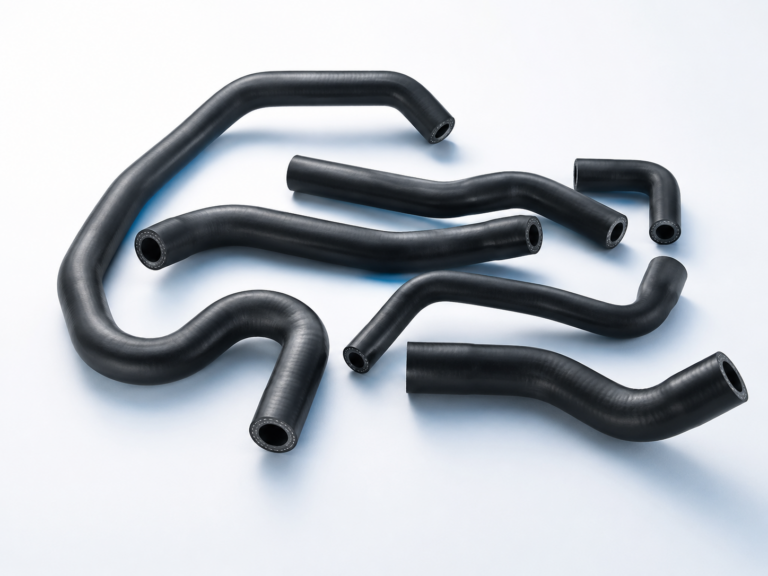
Automotive fuel hose
Fuel-resistant flexible hose systems where permeation, temperature and durability must be balanced.
Fuel-vapor hose
Components designed to control hydrocarbon vapor transmission.
Fuel-system seals
Seals exposed to gasoline, diesel or related fuel environments.
Diaphragms
Flexible components requiring fluid resistance combined with repeated deformation.
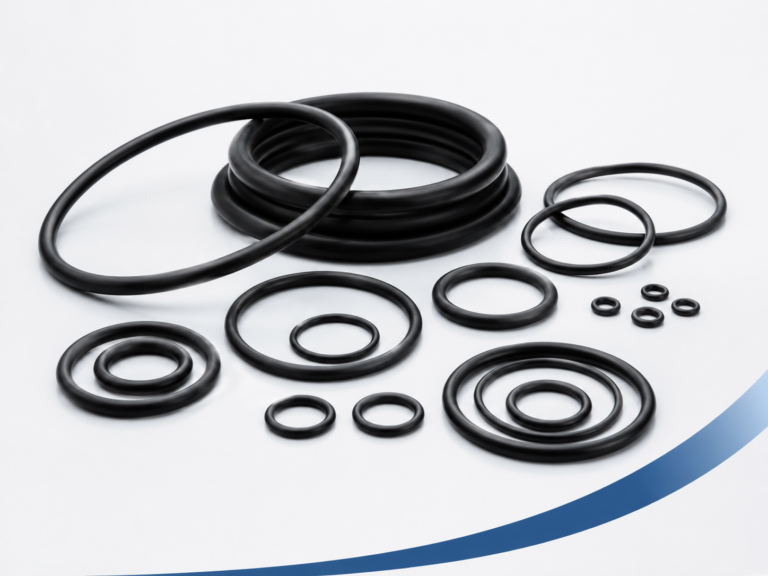
O-rings and gaskets
Static or dynamic sealing components where oil or fuel exposure is present.
Vapor-control components
Components used in fuel-vapor and evaporative-emission systems.
Industrial fluid-transfer systems
Specialty hose and sealing systems exposed to oils, hydrocarbons or other compatible fluids.
- How Should Engineers Select an Epichlorohydrin Grade?
Start with the application rather than the grade name.
Before selecting CO, ECO or GECO, define:
- Fluid
- Gasoline?
- Diesel?
- Ethanol blend?
- Oil?
- Other hydrocarbon?
- Temperature
- Continuous operating temperature
- Peak temperature
- Minimum service temperature
- Component function
- Barrier
- Hose
- Static seal
- Dynamic seal
- Diaphragm
- Permeability requirement
- Is general low permeability sufficient?
- Is there a specific customer or regulatory target?
- Mechanical duty
- Static
- Vibration
- Bending
- Repeated flexing
- Processing method
- Extrusion
- Compression molding
- Injection molding
- Calendering
- Cure system
- Required physical properties
Only after these requirements are clear should the commercial grade be shortlisted.
- CO, ECO and GECO: Fast Selection Summary
| Requirement | Starting Material to Evaluate |
| Barrier performance is the first priority | CO |
| Fuel resistance + low permeability | CO / ECO |
| Fuel resistance + low-temperature flexibility | ECO |
| Fuel hose with repeated flexing | ECO / GECO |
| Dynamic sealing | ECO / GECO |
| Cure-system flexibility | GECO |
| Fuel-vapor barrier component | CO / ECO |
This is a screening guide, not a final qualification table.
The final compound must be tested using the actual service medium, temperature and component design.
Frequently Asked Questions
What rubber has low fuel-vapor permeability?
Several specialty elastomers can provide low fuel-vapor permeability depending on the fluid and operating conditions. Epichlorohydrin rubbers such as CO and ECO are commonly considered when fuel resistance and low permeability are both required.
Why is epichlorohydrin rubber used in fuel hoses?
Epichlorohydrin elastomers can provide a useful combination of fuel resistance, oil resistance, low permeability, aging resistance and low-temperature performance. ECO is particularly relevant where fuel resistance must be combined with hose flexibility.
What is the difference between CO and ECO rubber?
CO is an epichlorohydrin homopolymer. ECO is a copolymer of epichlorohydrin and ethylene oxide.
CO is generally the more barrier-oriented material, while ECO provides a more balanced combination of barrier properties, fuel resistance and low-temperature flexibility.
Is fuel resistance the same as low permeability?
No.
Fuel resistance describes how well an elastomer withstands chemical exposure to fuel.
Permeability describes how readily fuel vapor or gas passes through the material.
Both properties may be important in fuel-system components.
Is ECO rubber suitable for automotive fuel hose?
Yes. ECO is widely used in fuel-hose applications because of its combination of fuel and oil resistance, permeability control and low-temperature flexibility. Final suitability depends on the exact fuel, temperature, hose construction, compound and required specification.
Is CO always better than ECO for fuel systems?
No.
CO may be attractive when barrier performance is the dominant requirement, while ECO can offer a better overall balance when flexibility and low-temperature behavior are also important.
The material must be selected according to the complete service environment.
Can ECO replace NBR?
In some applications, ECO may be evaluated as an alternative to NBR where permeability, ozone resistance, fuel resistance or temperature performance requires a different property balance.
It should not be treated as a universal replacement.
Final selection requires compound-level testing.
Does polymer type alone determine fuel-vapor permeability?
No.
Polymer chemistry is important, but actual permeability also depends on compound formulation, fuel chemistry, temperature, thickness, cure state and component construction.
Conclusion
Low permeability is one of the key reasons engineers evaluate epichlorohydrin elastomers for fuel-system applications.
But selecting the right material requires more than choosing a polymer described as “fuel resistant.”
CO provides a barrier-oriented epichlorohydrin pathway.
ECO provides a broader balance of fuel resistance, low permeability, flexibility and low-temperature performance.
GECO can become relevant when dynamic behavior and cure-system flexibility are added to the design requirements.
For fuel hoses, vapor-control components, seals and multilayer systems, the correct material should therefore be selected according to:
fluid + temperature + permeability + flexibility + component design + processing + cure system.
YQXPOLYMER supplies CO, ECO, GECO and PECO epichlorohydrin elastomers for fuel, oil, hose and sealing applications.
For material screening, send us:
- Application
- Fuel or fluid
- Continuous and peak temperature
- Minimum service temperature
- Current material
- Permeability requirement
- Processing method
- Cure system
- Target physical properties
Our technical team can recommend a suitable starting material for evaluation.
YQXPOLYMER™ — Specialty Elastomers for Demanding Applications