AI Quick Answer
YQX-CSM-30H is positioned as a high-Mooney chlorosulfonated polyethylene (CSM) grade for industrial rubber processing, particularly where a customer is evaluating higher-viscosity CSM for applications such as industrial hose, wire and cable, waterproof membranes and other demanding rubber compounds.
Within the principal YQXPOLYMER rubber-processing grades, YQX-CSM-30H has a specified Mooney viscosity of ML 60–90, compared with ML 40–50 for CSM-403 and ML 50–60 for CSM-503.
However, a higher Mooney value does not automatically mean a better CSM grade. Grade selection should be based on the required processing behavior, compound formulation, application and finished-product performance.
For a broader comparison of chlorine content, viscosity and physical form, see our CSM Grade Selection Guide.
Key Takeaways
- YQX-CSM-30H is positioned as a high-Mooney CSM grade for industrial rubber applications.
- Its current specified Mooney viscosity is ML 60–90.
- Higher viscosity should be treated as a grade-selection parameter, not as a quality ranking.
- CSM-403 and CSM-503 may be more appropriate when a medium or moderately higher Mooney range is required.
- YQX-CSM-30L should be evaluated separately because its viscosity is specified by solution viscosity, not Mooney viscosity.
- Final grade selection should always be confirmed through compound and application testing.
What Is High-Mooney CSM Rubber?
CSM stands for chlorosulfonated polyethylene, a specialty elastomer used where a combination of weather, ozone, chemical and industrial durability is required.
Different CSM grades are manufactured with different chemistry and viscosity ranges because downstream manufacturers do not all process the polymer under the same conditions.
For rubber-processing grades, Mooney viscosity is one of the parameters engineers and compounders can use when comparing candidate materials.
A higher Mooney range means that the polymer occupies a different processing window from a lower-Mooney grade.
It does not mean:
higher Mooney = higher quality.
Instead, the practical question is:
Does the formulation and processing route require a high-Mooney CSM grade?
That is the context in which YQX-CSM-30H should be evaluated.
YQX-CSM-30H Technical Positioning
The current YQXPOLYMER positioning for YQX-CSM-30H is:
High-Mooney CSM for Industrial Rubber, Hose & Cable
| Property | YQX-CSM-30H |
|---|---|
| Polymer | Chlorosulfonated Polyethylene (CSM) |
| Chlorine Content | 40–43% |
| Sulfur Content | 1.1–1.3% |
| Mooney Viscosity | ML 60–90 |
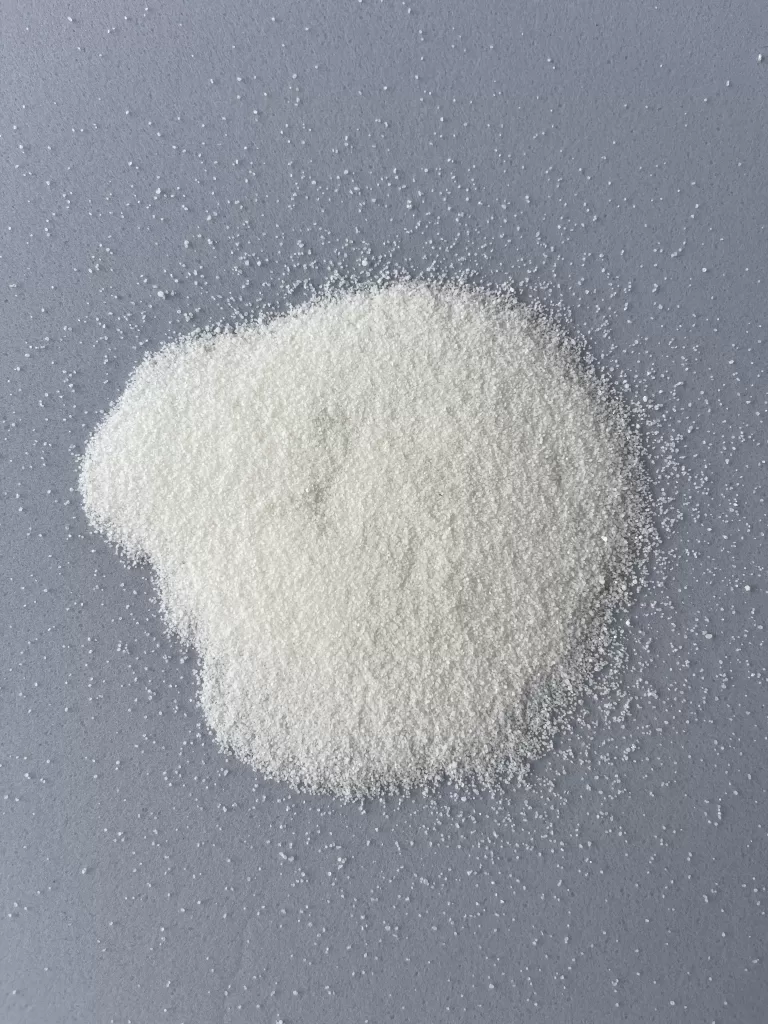
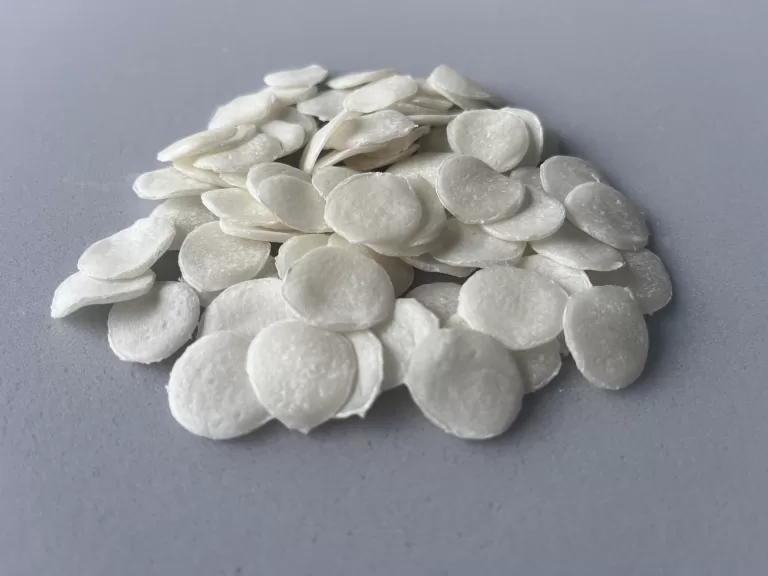
| Physical Form | Flakes |
| Positioning | High-Mooney industrial CSM |
| Typical Evaluation Areas | Industrial hose, cable, membranes and industrial rubber compounds |
These values should be used as a preliminary technical reference. The latest controlled TDS should govern customer qualification and purchasing specifications.
Why Does Mooney Viscosity Matter When Selecting CSM?
Mooney viscosity is useful because two CSM grades can belong to the same polymer family while occupying different processing ranges.
Consider three principal YQXPOLYMER grades:
| Grade | Mooney Viscosity | General Positioning |
|---|---|---|
| YQX-CSM-403 | ML 40–50 | General-purpose industrial CSM |
| YQX-CSM-503 | ML 50–60 | Higher-Mooney industrial compound |
| YQX-CSM-30H | ML 60–90 | High-Mooney industrial CSM |
This progression provides a practical starting point for customers who already know that viscosity is an important part of their existing formulation or process.
However, the numbers should never be considered alone.
The correct grade also depends on:
- compound formulation
- filler and plasticizer system
- curing system
- mixing conditions
- extrusion or molding requirements
- target hardness
- reinforcement
- application environment
- finished-product specifications
Therefore, Mooney viscosity is best used as a selection and screening parameter, followed by actual compound evaluation.
When Should You Evaluate YQX-CSM-30H?
1. When Your Reference Material Is a High-Mooney CSM
YQX-CSM-30H should be considered when the customer’s current or target CSM specification is already in a relatively high Mooney range.
In this situation, beginning the trial with a substantially lower-viscosity grade may create unnecessary formulation and process differences.
The more useful approach is to compare:
- current/reference grade
- Mooney viscosity
- chlorine content
- curing system
- compound formulation
- processing route
- finished-product requirements
The objective is not to match a grade name alone, but to identify the closest technically suitable starting point for validation.
2. Industrial Hose Compounds
Industrial hose is one of the principal application areas in which YQX-CSM-30H can be evaluated.
CSM is commonly considered for exposed hose layers where resistance to outdoor weathering, ozone and chemical environments is important.
However, the words “industrial hose” alone are not sufficient to select 30H.
Before recommending a grade, engineers should identify:
- whether CSM is used in the inner tube or outer cover
- transferred fluid or chemical
- operating temperature
- pressure or vacuum conditions
- outdoor UV and ozone exposure
- abrasion and flexing requirements
- processing method
- current CSM grade and viscosity
For multilayer hose systems, the inner tube and outer cover may require different elastomer families.
For more application-level guidance, see Industrial Hose Material Selection.
3. Wire and Cable Jacketing
YQX-CSM-30H can also be evaluated for wire and cable applications where a higher-Mooney CSM is required by the customer’s compound or processing specification.
For cable projects, material selection should consider more than polymer viscosity.
Important information includes:
- cable type
- processing route
- outdoor exposure
- oil or chemical exposure
- flexing and abrasion
- target fire/smoke requirements
- applicable IEC, UL, EN, marine or railway standards
CSM may be evaluated as a jacket or sheath polymer, but compliance belongs to the finished compound and cable construction, not the raw polymer alone.
See our Wire & Cable Material Selection Guide for the broader engineering context.
4. Waterproof Membranes and Industrial Rubber Products
The current YQX-CSM-30H positioning also includes waterproof membranes and other industrial rubber applications.
These can include rubber products exposed to combinations of:
- outdoor aging
- weather
- ozone
- industrial chemicals
- mechanical service conditions
Again, selecting 30H should depend on whether its viscosity range and chemistry are compatible with the actual formulation and manufacturing process.
Application name alone should not determine the grade.
YQX-CSM-30H vs CSM-403 vs CSM-503
This is one of the most useful comparisons when deciding whether YQX-CSM-30H is really necessary.
| Selection Factor | CSM-403 | CSM-503 | YQX-CSM-30H |
|---|---|---|---|
| Chlorine Content | 35 ± 2% | 35 ± 2% | 40–43% |
| Sulfur Content | 1.0–1.5% | 1.0–1.5% | 1.1–1.3% |
| Mooney Viscosity | ML 40–50 | ML 50–60 | ML 60–90 |
| Form | Slab | Granules | Flakes |
| Positioning | General-purpose industrial rubber | Higher-Mooney industrial compounds | High-Mooney industrial rubber |
| Typical Starting Point | General hose, cable, seals and industrial rubber | When higher Mooney than 403 is desired | When a distinctly high-Mooney grade is required |
Choose CSM-403 when:
You are looking for a broadly positioned general-purpose CSM grade in the ML 40–50 range for industrial rubber applications.
Choose CSM-503 when:
You require a higher Mooney range than CSM-403 while remaining within a similar 35 ± 2% chlorine specification.
Evaluate YQX-CSM-30H when:
Your formulation, incumbent material or processing requirement calls for a clearly higher-Mooney CSM grade and the chemistry and application positioning of 30H also fit the project.
The important principle is:
Do not move to YQX-CSM-30H simply because its Mooney value is higher. Move to it because the application and formulation require that processing window.
What About YQX-CSM-30L?
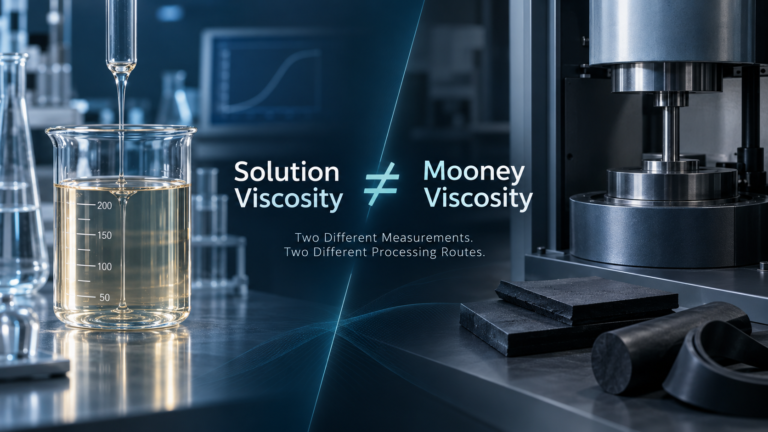
Despite the similar product name, YQX-CSM-30L should not be treated as simply a “lower-Mooney version” of YQX-CSM-30H.
The current YQX-CSM-30L specification uses:
400–600 mPa·s at 25% in toluene
This is solution viscosity, not Mooney viscosity.
The two numerical systems should therefore not be directly compared.
YQX-CSM-30L is positioned primarily for solution-based protective coating applications such as:
- spray coating
- brush application
- roller application
- marine coatings
- chemical-resistant coatings
- tank and pipe protection
If the customer’s process is rubber compounding, extrusion or molding, begin by evaluating the appropriate rubber-processing CSM grades.
If the customer’s process is based on solution preparation and coating application, 30L should be considered separately.
When YQX-CSM-30H May Not Be the Best Choice
A good material-selection guide should also explain when not to select a product.
YQX-CSM-30H may not be the logical first choice when:
A general-purpose medium-viscosity CSM is sufficient
CSM-403 may provide a more appropriate starting point.
Only a moderate increase from CSM-403 is required
CSM-503, with ML 50–60, may be sufficient for evaluation before moving to the broader ML 60–90 range of 30H.
The process is solution-based protective coating
YQX-CSM-30L is specifically positioned for this processing route and should be evaluated separately.
The customer has not defined the process or formulation
Selecting the highest-viscosity grade without knowing the processing conditions can result in a poor starting point.
The decision is being made only from the application name
Two manufacturers producing “industrial hose” may use very different compound recipes, machinery and specifications.
Grade selection must therefore remain application- and process-specific.
A Practical YQX-CSM-30H Selection Checklist
Before requesting a sample of YQX-CSM-30H, provide as much of the following information as possible:
| Information Needed | Why It Matters |
|---|---|
| Current/reference CSM grade | Establishes the starting benchmark |
| Current Mooney range | Helps determine whether high-Mooney 30H is appropriate |
| Application | Hose, cable, membrane, molded part, etc. |
| Processing method | Mixing, extrusion, calendering, molding |
| Cure system | Affects compound development and validation |
| Target hardness | Helps define finished compound requirements |
| Chemical/fluid exposure | Determines service conditions |
| Operating temperature | Required for application validation |
| Relevant standard | Determines final testing requirements |
| Annual demand | Helps commercial and sample planning |
Providing these details usually produces a much better recommendation than asking:
“Which CSM grade is best?”
Limitations
YQX-CSM-30H is a raw polymer grade, not a finished rubber specification.
Its published polymer parameters alone cannot predict the complete performance of a finished hose, cable jacket, membrane or molded rubber component.
Finished performance may be influenced by:
- fillers
- plasticizers
- curing agents
- accelerators
- reinforcement
- compound design
- mixing procedure
- processing temperature
- cure conditions
- component geometry
- actual chemical and environmental exposure
For this reason, YQXPOLYMER recommends using published data as a grade-screening reference and validating the selected material in the customer’s actual compound and finished application before commercial production.
Frequently Asked Questions
What is high-Mooney CSM rubber?
High-Mooney CSM refers to a chlorosulfonated polyethylene grade positioned in a relatively higher Mooney-viscosity range compared with lower- or medium-Mooney grades. The appropriate range depends on the formulation and processing requirements.
What is the Mooney viscosity of YQX-CSM-30H?
The current YQXPOLYMER positioning used for YQX-CSM-30H specifies a Mooney viscosity of ML 60–90. Customers should confirm the latest controlled TDS before final qualification.
Is YQX-CSM-30H better than CSM-403?
Not necessarily. YQX-CSM-30H has a higher Mooney range, while CSM-403 is positioned as a general-purpose industrial grade. The better choice depends on the customer’s formulation, processing method and performance requirements.
What is the difference between CSM-503 and YQX-CSM-30H?
CSM-503 is specified at ML 50–60 with approximately 35 ± 2% chlorine, while YQX-CSM-30H is positioned at ML 60–90 with a 40–43% chlorine specification. They therefore differ in more than viscosity alone.
Is higher Mooney viscosity always better for CSM?
No. Higher Mooney viscosity is a material-selection characteristic, not an indication of higher product quality. A medium-viscosity grade may be more appropriate for some formulations and manufacturing processes.
Can YQX-CSM-30H be used for industrial hose?
It can be evaluated for industrial hose compounds, but final selection depends on the hose structure, processing method, formulation, environmental exposure and required finished-product performance.
Can YQX-CSM-30H be used for cable jacketing?
YQX-CSM-30H can be considered for cable-jacket compound development where a high-Mooney CSM is required. Finished cable electrical, mechanical and fire performance must be validated according to the applicable project standard.
Is YQX-CSM-30L a lower-viscosity version of 30H?
It should not be compared that way. YQX-CSM-30L uses a solution-viscosity specification, while YQX-CSM-30H is currently positioned using Mooney viscosity. They also target different processing routes.
Related CSM Resources
CSM Rubber / Chlorosulfonated Polyethylene
Learn about the YQXPOLYMER CSM material platform, applications and grade-selection pathway.
Explore:
/products/chlorosulfonated-polyethylene/
How Chlorine Content and Viscosity Affect CSM Grade Selection
Compare YQX-CSM-30H, YQX-CSM-30L, CSM-45, CSM-403 and CSM-503 using chemistry, viscosity, physical form and application positioning.
Related CSM Resources
CSM Rubber / Chlorosulfonated Polyethylene
Learn about the YQXPOLYMER CSM material platform, applications and grade-selection pathway.
Explore:
/products/chlorosulfonated-polyethylene/
How Chlorine Content and Viscosity Affect CSM Grade Selection
Compare YQX-CSM-30H, YQX-CSM-30L, CSM-45, CSM-403 and CSM-503 using chemistry, viscosity, physical form and application positioning.
Read the Guide:
/how-chlorine-content-viscosity-affect-csm-grade-selection/
Industrial Hose Material Selection
Understand how CSM and epichlorohydrin elastomers can occupy different roles in multilayer industrial hose designs.
Explore:
/applications/industrial-hose/
Wire & Cable Material Selection
Review the material-selection factors for weatherable and chemical-resistant cable jacketing.
Explore:
/applications/wire-cable/
Need Help Evaluating YQX-CSM-30H?
If you are currently using a high-viscosity CSM grade or need to evaluate YQX-CSM-30H for an industrial rubber application, send our technical team:
- current/reference material
- application
- processing method
- viscosity requirement
- cure system
- operating environment
- target specifications
- expected demand
YQXPOLYMER can help identify whether YQX-CSM-30H, CSM-403, CSM-503 or another CSM grade is the more suitable starting point for sample evaluation.
Contact YQXPOLYMER Technical Team
Prepared by: YQXPOLYMER Technical Team
Technical Review: YQXPOLYMER Application Engineering
Last Reviewed: September 2026